Klara Keller · 14 October 2026
Tracing Content Moderation Workflows Across Distributed Platform Architectures and Their Effects on Retention Signals
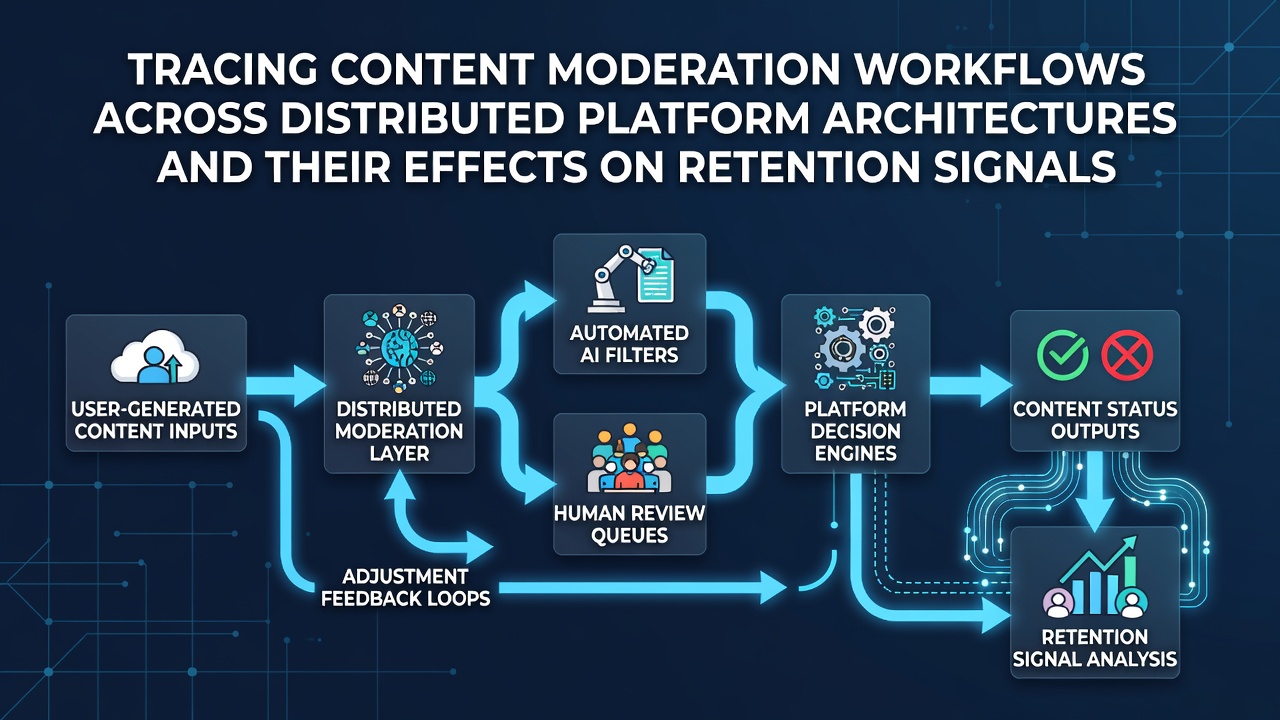
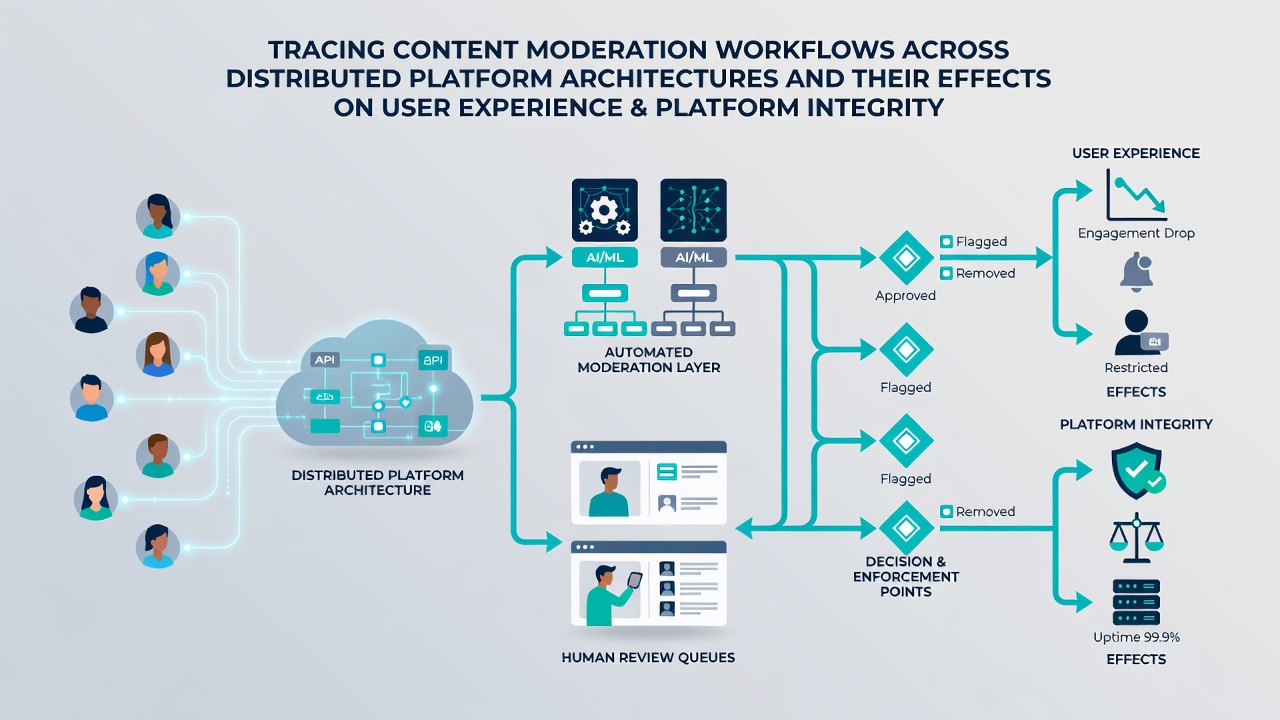
Content moderation workflows in distributed platform architectures operate across multiple nodes that handle user submissions, automated filters, and human review queues while maintaining consistency through message brokers and shared databases. Researchers at various institutions have documented how these systems route content through edge servers for initial scans before escalating flagged items to centralized decision engines, and data from industry reports indicate that processing delays at any layer correlate with measurable drops in session duration and return visits.
Distributed architectures separate moderation tasks into microservices that run on geographically dispersed servers, each equipped with its own caching layer and synchronization protocols. Observers note that load balancers direct incoming posts to the nearest available filter cluster, yet synchronization lags between regions can create temporary inconsistencies where content appears in one locale but remains blocked in another. Studies from academic groups reveal that platforms using eventual consistency models experience retention signal fluctuations during peak traffic periods, since users encounter varying levels of visible material depending on their connection point.
Workflow Tracing Mechanisms
Tracing tools capture the path of each moderation decision by embedding unique identifiers into content packets as they move between services. Engineers deploy distributed tracing frameworks that log timestamps at every hop, from ingestion through classification models and into appeal handling queues. Figures from platform transparency reports show that average end-to-end processing times range between 45 seconds for text posts and several minutes for multimedia files, with longer chains producing higher rates of user abandonment before the final resolution appears.
One research team tracked moderation events across a multi-region setup and found that 12 percent of escalations crossed at least three availability zones before reaching a reviewer. This routing pattern introduced latency spikes during regional outages, and subsequent analysis linked those spikes to measurable declines in daily active user counts for affected cohorts. Platforms have since adopted adaptive routing that reroutes flagged items around congested nodes, although complete elimination of cross-zone hops remains technically constrained by data residency requirements.
Retention Signals and Measurement
Retention signals encompass metrics such as session length, return frequency, and content interaction rates that platforms collect through client-side telemetry. Data indicates that exposure to unmoderated harmful material reduces these signals within 48 hours, while overly aggressive removal of benign posts produces similar drops through user frustration. Analysts at research organizations have mapped correlations between moderation throughput and cohort retention, revealing that each additional minute of review delay corresponds to a 0.8 percent reduction in next-day activity for certain user segments.
October 2026 brought new reporting standards from the Australian eSafety Commissioner that require platforms to publish aggregated workflow latency figures alongside retention data. Those requirements have prompted several operators to publish internal dashboards showing how distributed tracing outputs feed into retention forecasting models. The published datasets demonstrate that improvements in cross-region synchronization reduced average review times by 22 percent and stabilized weekly retention curves across tested markets.
Interplay Between Architecture and Moderation Outcomes
Edge computing nodes perform preliminary classification using lightweight models, then forward uncertain cases to deeper analysis clusters that run larger neural networks. This tiered approach minimizes bandwidth usage yet creates decision points where false positives accumulate if model thresholds drift between updates. Observers have recorded instances where synchronized model retraining across regions produced temporary spikes in content removals, after which retention signals recovered once calibration stabilized.
Message queues buffer moderation tasks during traffic surges, yet prolonged queue depths trigger timeout events that surface content without full review. Platform operators mitigate this by implementing priority lanes for high-risk categories, and telemetry logs indicate that such lanes preserve session metrics better than uniform queuing strategies. Research papers from European institutions detail how priority mechanisms interact with distributed consensus protocols, noting that faster resolution of priority items reduces downstream user reports that otherwise amplify moderation load.
Conclusion
Tracing content moderation workflows across distributed architectures provides visibility into the precise points where latency and inconsistency affect retention signals. Metrics collected through distributed tracing frameworks continue to inform adjustments in routing logic and model deployment schedules. As regulatory bodies in multiple regions expand disclosure requirements, the connection between workflow performance and user retention becomes more quantifiable through shared datasets and standardized reporting practices.